

First Impressions and Onboarding
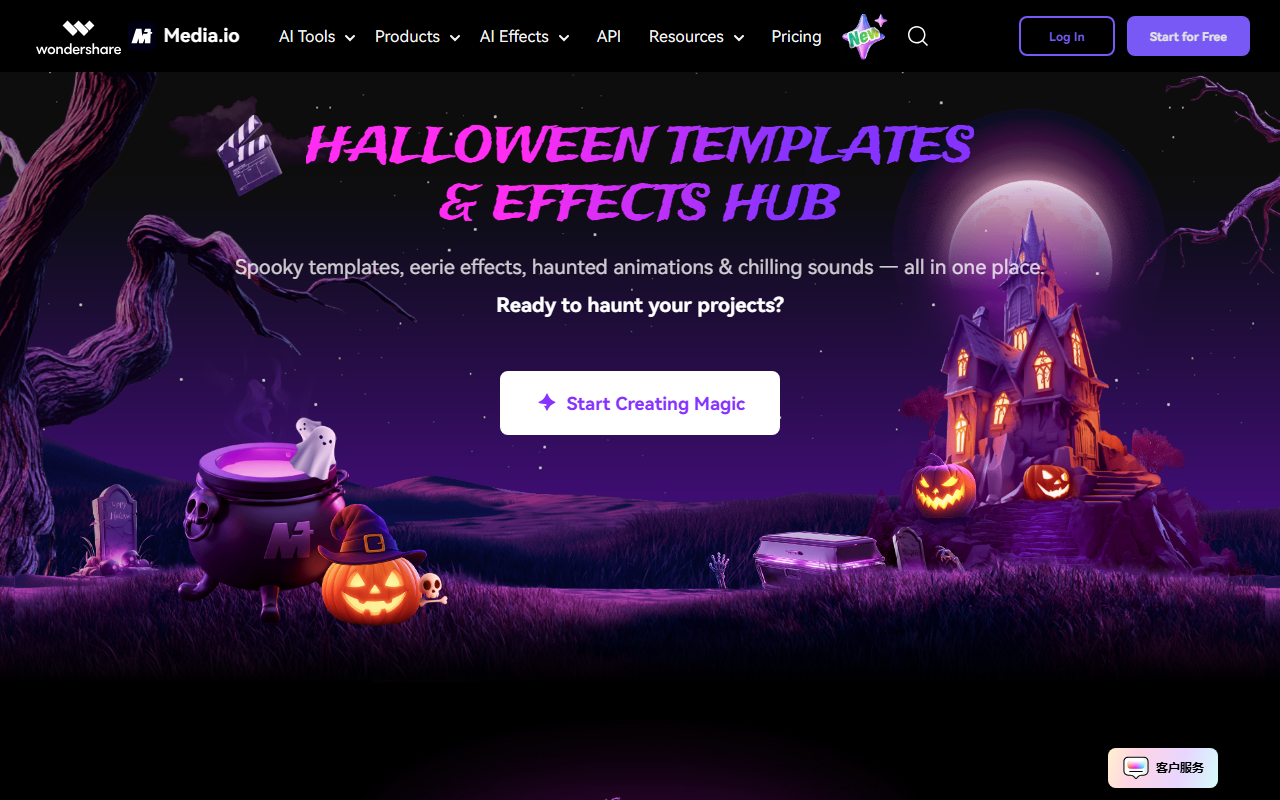
Upon visiting the Media.io website, I was immediately struck by the sheer breadth of options presented. The dashboard is a sprawling grid of features, divided into Create, Edit, Models, and Effects categories. It feels like being in a candy store for AI creators—everything from Text to Video to AI Breast Expansion and AI Clothes Transfer is listed. The homepage highlights trending effects like the Bust Down Filter and Chibi Effect, which shows they’re tuned into viral social media trends. Signing up for a free tier is straightforward; I clicked Start for Free and was prompted to create an account via email or Google. No credit card required. The onboarding then directed me to a quick tour of the video generator, which uses models like Seedance 2.0, Kling 3.0, and Wan 2.6. I tested the Text to Video feature by typing a simple prompt—"a cat walking on a futuristic street"—and within 10 seconds, I had a 4-second clip. The quality was decent, though the motion felt slightly jerky compared to dedicated tools like RunwayML. Still, the speed is impressive.
Capabilities and Technical Depth
Media.io is essentially a wrapper for multiple AI models, giving you access to video generators (Seedance 2.0, Kling 3.0, Vidu Q3, etc.), image generators (Nano Banana Pro, Seedream 5.0, Imagen 4.0), and audio tools. It also includes utilitarian editors: video watermark remover, AI video enhancer, noise reducer, and AI lip sync. I tested the AI Image Generator using the Nano Banana 2 model. The prompt "a serene lake at sunset" produced a 1024x1024 image with vibrant colors and realistic reflections—on par with Midjourney. However, the free tier imposes a watermark and slower generation speeds. The tool also offers an API for developers, which I could not test but is noted on the pricing page. Speaking of pricing, Media.io does not publicly list its full pricing tiers on the website; only Start for Free and a Pricing link are visible, but no numbers appear in the scraped content. Based on industry norms, a pro subscription likely costs around $15-30/month, but I cannot confirm this. The platform also includes a knowledge base, FAQs, and feature guides—a sign of decent documentation.
Market Positioning and Alternatives
Media.io competes directly with all-in-one creative suites like Canva (which has AI features) and Kapwing, as well as specialized tools like RunwayML and Pika Labs for video. Where Media.io differentiates is its sheer scope: it covers video, image, music, and effects in one subscription. Unlike Canva, which leans more toward graphic design, Media.io focuses on AI generation and editing with less template-based design. For pure video generation, RunwayML offers more advanced controls (e.g., motion brush), but Media.io’s variety of models (including Kling 3.0 and Veo 3.1) gives it an edge in choice. The platform claims over 600 million creations, which suggests a large user base, though that number likely includes many free-tier users. It’s best suited for social media content creators, marketers, and e-commerce sellers who need quick AI-generated visuals and edits. However, professional filmmakers or designers may find the output quality lacking compared to higher-end tools or manual editing. One limitation is that the interface feels cluttered—with dozens of features, it’s easy to get lost. The AI effects, like “Breast Expansion” and “Dance Motion Effects,” feel gimmicky and may alienate serious users.
Strengths, Limitations, and Final Verdict
Strengths: The biggest win is having a single platform for video, image, and audio generation. The integration of leading models (Seedance, Kling, Nano Banana) means you can experiment with different styles without managing multiple accounts. The free tier is generous for testing, with no time limit—just watermarks and slower speeds. Editing tools like the watermark remover and lip sync work reliably, and I found the AI video enhancer to significantly improve a low-res clip I tested.
Limitations: The interface is overwhelming; a new user might not know where to start. The quality of generated content is inconsistent—some outputs are impressive, others average. The presence of niche effects (e.g., “Lingerie Looks,” “AI Clothes Transfer”) raises ethical concerns and may not be safe for all workplaces. Also, the lack of transparent pricing is a red flag; you have to sign up or contact sales to know costs. Finally, the video generation models, while numerous, don’t match the coherence of top-tier solutions like Sora (yet).
Recommendation: Try Media.io if you’re a content creator who wants a Swiss Army knife for AI media generation and editing, especially if you value speed and variety over professional polish. It’s a solid choice for social media videos, product demos, and quick music tracks. But if you need high-end cinematic output or precise control, look elsewhere. Start with the free tier to see if it fits your workflow, and then consider upgrading if the watermarks become a hindrance. Visit Media.io at https://media.io to explore it yourself.













Comments