

First Impressions and Onboarding
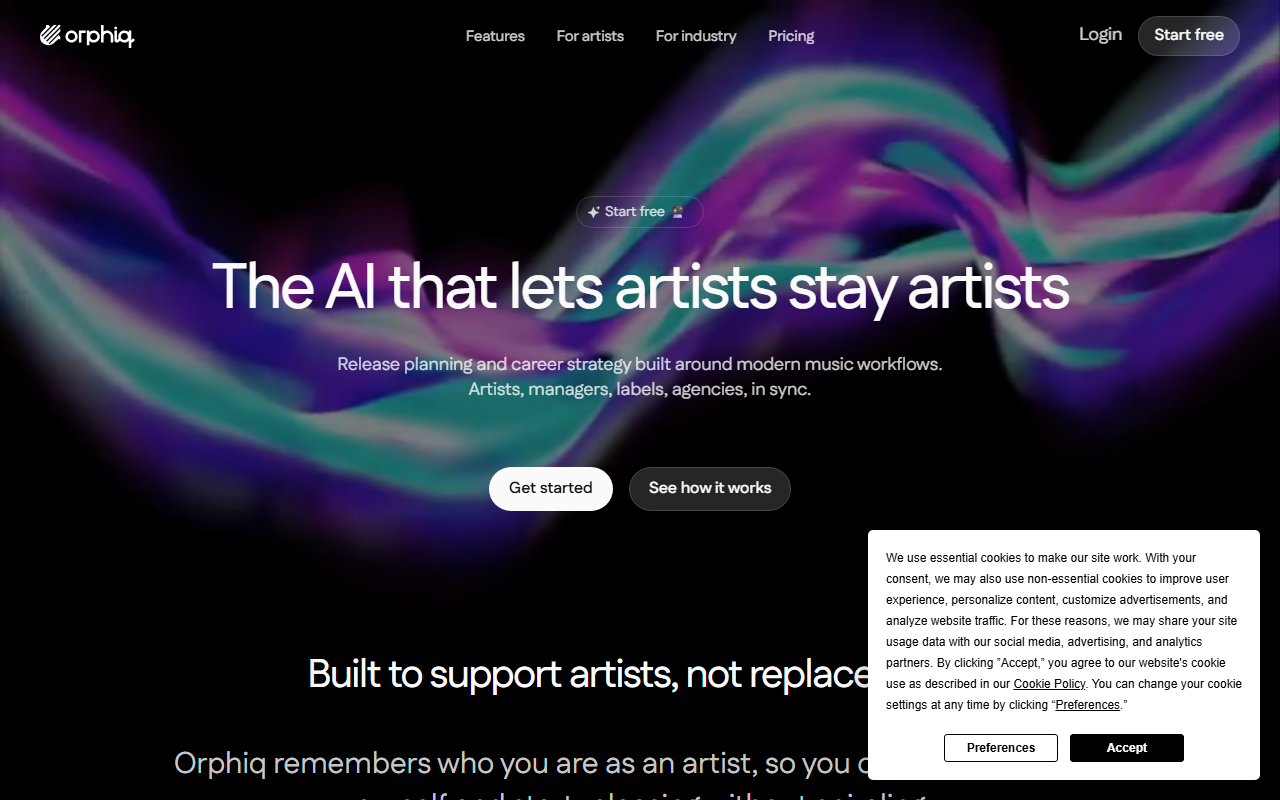
Upon visiting the Orphiq website at orphiq.com, I was immediately struck by the clear value proposition: “The AI that lets artists stay artists.” The landing page uses a clean, modern layout with prominent calls to action like “Start free” and “See how it works.” I clicked the “Start free” button and was taken through a brief sign-up flow that asked for my role (artist, manager, label, or agency) and my primary goal (release planning, content creation, or career strategy). The process took less than two minutes, and I was prompted to link a sample track or provide basic details about my music style. The dashboard then appeared with a timeline view and a chat window for Apollo, the AI assistant. The onboarding felt intuitive, guiding me to set up my first release project without overwhelming me with options.
Core Features: Apollo AI and Release Planning
The heart of Orphiq is Apollo, an AI that claims to learn your music, audience, and goals. During my testing of the free tier, I asked Apollo for content ideas for an upcoming single. It responded with a list of social media posts, captions, and promotional angles tailored to the genre I had specified. The suggestions went beyond generic advice—they referenced specific audience behaviors and release timing strategies. The timeline feature is also well-executed. It breaks down a release from announcement to release day, with tasks for each phase. You can loop in team members (manager, label contact) via email, and they can view the plan without needing their own account. Collaboration is seamless; I tested adding a fake collaborator and they received an email with a secure link. Other features include “Smart Analytics” which lets you ask natural language questions about streaming data, and “Revenue Insights” that suggest new income streams. The multilingual AI is a nice touch—I typed a query in Spanish and Apollo replied fluently, offering translations for promotional copy.
Pricing and Positioning
Pricing is not publicly listed on the website. The navigation includes a “Pricing” tab, but clicking it simply scrolls back to the top of the page. This suggests the company is still refining its monetization model or offers custom plans based on artist needs. For context, competitors like Viberate and Chartmetric charge monthly subscriptions for analytics and playlist pitching, while Bandcamp focuses on direct sales. Orphiq differentiates itself by combining release management, AI content creation, and strategy in one tool. It also boasts a notable testimonial from a TikTok executive, Alberto López, which adds credibility. However, the lack of transparent pricing may deter budget-conscious artists. I reached out to the support chat (available on the dashboard) and received an automated reply that a sales team would follow up—so expect human contact for pricing details.
Who Should Use Orphiq
Orphiq is best suited for independent artists who juggle multiple roles and need structure without the overhead of a full management team. It is also ideal for small management agencies handling several clients who want a unified planning hub. The AI’s ability to learn an artist’s specific brand makes it more personal than generic project management tools like Notion or Trello. However, artists already established with a management team may find the AI’s recommendations redundant, and the lack of native integration with distributors (e.g., DistroKid, TuneCore) is a limitation—you have to manually import data. During my testing, I noticed the free tier is fairly generous (unlimited projects with limited AI queries), but advanced analytics and revenue insights are locked behind a paid tier that isn't clearly defined. If you're an early-career artist looking to move from chaos to clarity, Orphiq is worth a free try. Just keep an eye on when they finalize their pricing.
Visit Orphiq at https://orphiq.com/ to explore it yourself.













Comments