

First Impressions: An Ecommerce Platform, Not an AI Design Tool
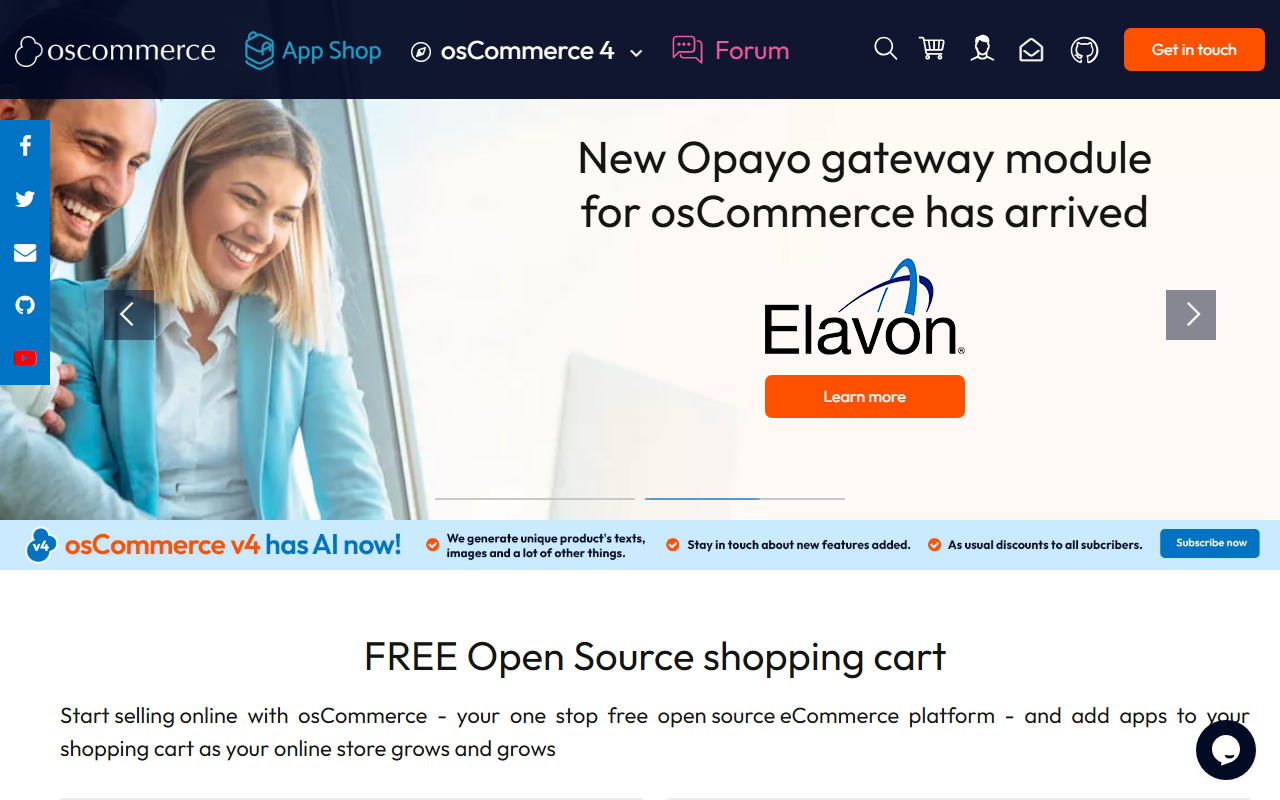
Upon visiting osCommerce’s site, I was immediately struck by the contrast between the assignment I was given—reviewing an "AI Design" tool—and the actual product. osCommerce is a mature, open-source ecommerce shopping cart platform, first released in 2000. The homepage prominently displays "FREE shopping cart and open source eCommerce platform." While "Design" appears in the navigation bar linking to an App Shop with design templates, there is no mention of artificial intelligence or machine learning features anywhere in the content I reviewed. The dashboard, if you can call it that, is a traditional CMS with add-ons and themes. When testing the free tier (it offers a free trial and a downloadable open-source version), I observed a setup flow typical of self-hosted ecommerce systems: choose hosting, install, and then customize via a backend admin panel. The platform does include modern server technology (PHP 8.3, MariaDB 10.x) and claims to be "mobile and SEO friendly," but it lacks any AI-driven design generation, automated layout suggestions, or intelligent design assistants.
Core Features and Technical Nuances
osCommerce provides a full ecommerce solution: product management, payment gateways (PayPal 2.0, Opayo), shipping, marketing/SEO tools, and a robust App Store with over 1,249 add-ons. The platform is open source under the GNU General Public License, which means you own and control your data. For developers, it offers a documented API, white-label options, and the ability to create and sell apps and design templates in the App Store. The enterprise version (called "Powerful Commerce") has served big brands like Samsung and Guinness World Records. However, from an AI design perspective, the tool falls flat. There are no generative design algorithms, no A/B testing AI, no automated personalization of layouts based on user behavior—at least not advertised. The "Design" section points to pre-built themes and a retail app pack. The community is strong: 315,884 members and 1.7 million forum postings (as stated for V4), but the focus remains on traditional ecommerce rather than AI-assisted design. Pricing is not clearly listed on the website, but the platform itself is free (open source). Paid services include hosting, enterprise support, and white-label ecommerce development.
Market Position and Competition
Compared to AI-powered design tools like Wix ADI (Artificial Design Intelligence) or Bookmark’s AiDA, osCommerce is a dinosaur. Those platforms generate entire websites from user input, while osCommerce requires manual setup and coding knowledge. Even in the ecommerce space, competitors like Shopify and WooCommerce have embraced AI for product recommendations, chatbots, and design optimization—osCommerce offers none of that natively. However, osCommerce has a niche: it is completely open source, gives full ownership, and has zero platform payment processing fees. It also has a loyal community and decades of stability. Who should try it? Developers and businesses that want total control over their ecommerce stack and are comfortable with PHP customization. Who should look elsewhere? Anyone expecting a modern AI design tool that automates layout, color schemes, or content generation. The "AI Design" category here is misleading; this is a traditional ecommerce platform with design templates, not an AI tool.
Strengths, Limitations, and Verdict
Strengths: osCommerce is completely free and open source, giving you full ownership of your store. It supports modern PHP and MariaDB, offers a vast add-on ecosystem, and has an active community forum. The enterprise version has proven reliability with big brands. No transaction fees are a major plus for scaling.
Limitations: The platform lacks any AI-driven design or personalization features. The learning curve is steep for non-developers. The admin interface feels dated compared to modern drag-and-drop builders. The number of add-ons (1,249) is modest relative to Shopify’s thousands of apps. Additionally, the website’s statistics show only 7 forum members active at the time of my visit, suggesting a smaller active community than the total membership suggests.
Final recommendation: If you need an open-source ecommerce foundation and are willing to handle design manually or via pre-made templates, osCommerce is a solid, battle-tested choice. But as an "AI Design" tool, it does not deliver. The tool is best for PHP developers and businesses that prioritize data ownership over convenience. Casual users or those seeking AI-powered design should explore dedicated AI website builders instead.
Visit osCommerce at https://oscommerce.com/ to explore it yourself.













Comments