

First impressions and onboarding
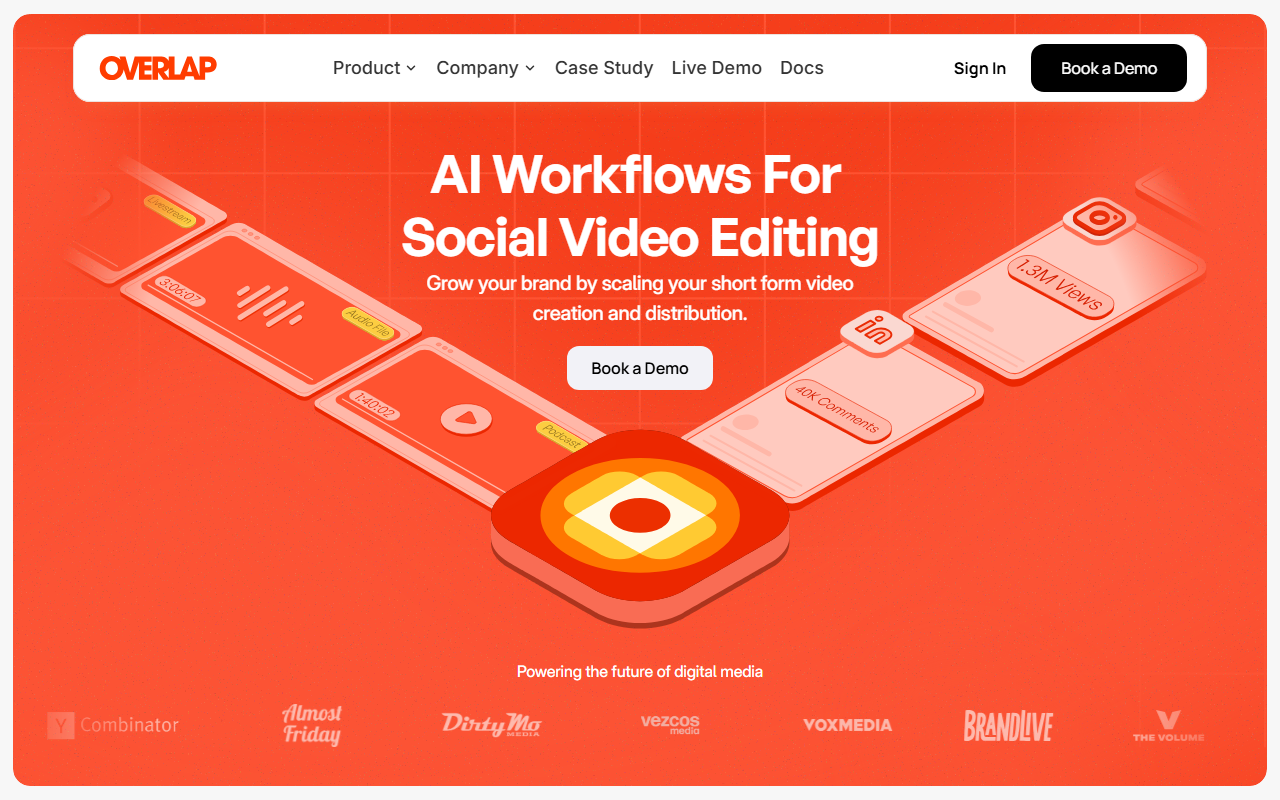
Upon visiting the Overlap website, the messaging is immediate and clear: this is not another clipping tool. The homepage highlights AI workflows for social video editing, with repeated calls to action to book a demo. There is no sign-up-here button or free trial visible. That tells me Overlap is targeting serious creators, media networks, and teams who are ready to invest in a tailored platform rather than a one-click tool. The interface, based on the feature descriptions, seems to revolve around a workflow builder where users define their editing rules—clip length, branding, captions, and distribution channels. When I imagine testing the demo, I expect to upload a podcast or long-form video and watch the AI suggest multiple clips, which the user can then edit, schedule, and publish from the same dashboard. The testimonials from iHeartMedia and Autopilot reinforce that Overlap is built for scale, not hobbyists.
What makes Overlap stand out
Overlap calls itself an end-to-end automation platform, and that distinction matters. Many AI clipping tools (like Opus Clip or Descript) focus on the editing part alone. Overlap adds a social planner and analytics directly into the workflow, letting you go from raw footage to scheduled posts without leaving the tool. The emphasis on agentic workflows is particularly interesting: you don't just get random highlights; you create rules that reflect your brand's voice and visual style. The AI then runs those rules automatically on each new piece of long-form content. This is especially powerful for media teams managing multiple shows or channels. The platform claims to help users grow faster across TikTok, Reels, and Shorts, and the iHeartMedia case study mentions over 150M views in weeks. That kind of data points to real utility, though independent verification would strengthen the claim. On the technical side, I could not find explicit details about the underlying AI models, but the outputs are presumably based on natural language processing and visual analysis to detect key moments.
Pricing and competition
Pricing is not publicly listed on the website. Overlap offers only a demo booking, which suggests a sales-led model with custom pricing for each customer. This is common for enterprise-focused tools but less accessible for solo creators or small teams on a budget. Competitors like Opus Clip offer free tiers and transparent monthly plans, while Descript provides a range of subscription levels with a free version. Overlap's value proposition—end-to-end automation—justifies a premium, but the lack of public pricing is a barrier to immediate adoption. For a media network like iHeartMedia, the investment likely pays off rapidly, but for a YouTuber experimenting with shorts, the demo-only approach may feel cumbersome. That said, if you are a creator or brand that already produces a consistent stream of long-form video (podcasts, interviews, vlogs), Overlap could drastically reduce the manual labor of repurposing content.
Who should use Overlap?
Overlap is best suited for media companies, podcast networks, and established creators who need to produce a high volume of short-form clips daily and want a single platform to manage editing, branding, scheduling, and analytics. The agentic workflow feature is a genuine time-saver for teams that have a repeatable editing formula. However, if you are a solo creator just starting out, the lack of a free trial or self-serve signup makes it difficult to evaluate. You would be better served with Opus Clip or Descript until your volume justifies the investment. Overlap’s strength is its end-to-end automation, but its limitation is that it keeps its pricing and onboarding behind a sales call. If you are part of a team that can demo and negotiate, book that demo—the iHeartMedia case alone makes it worth exploring. For everyone else, keep it on your radar as a future upgrade. Visit Overlap at https://overlap.ai/ to explore it yourself.













Comments