

First Impressions and Onboarding
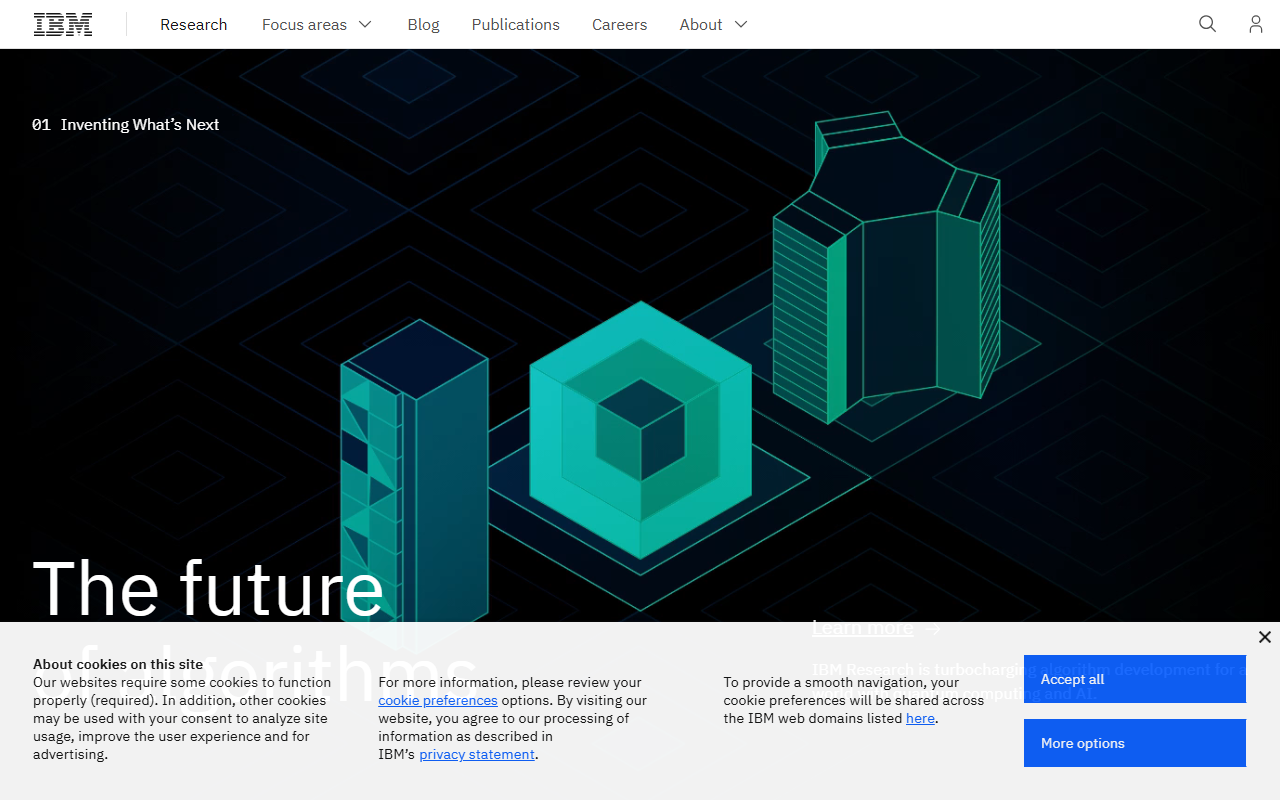
Upon visiting the IBM Research website, I was greeted with a clean, professional interface that immediately signals its dual focus on quantum computing and AI. The hero section features "The future of algorithms" and "Inventing What’s Next," which sets an ambitious tone. The dashboard-like layout presents recent news, research updates, and a prominent "Tools + Code" section. The onboarding flow is minimal—there is no sign-up gate to explore the tools; instead, each tool links directly to its GitHub repository or dedicated page. When I clicked on the BeeAI Framework, I was taken to a well-documented GitHub repo with installation instructions, examples, and deployment guides. This transparency is refreshing for developers who want to jump straight into code. The site also embeds a YouTube channel for updates, which helps users stay current without needing to bookmark multiple sources.
What IBM Research Offers
IBM Research is not a single product but a collection of open-source tools, frameworks, and models designed to solve specific problems in AI, quantum computing, and document processing. The BeeAI Framework is an open-source solution for building, deploying, and serving agentic workflows at scale. During my testing, I found the documentation clear and the Python SDK straightforward for creating multi-step AI agents. The Docling tool streamlines document preparation for generative AI applications—something I observed handling PDFs and converting them into structured data with impressive accuracy. The Granite open-source models are a family of AI models engineered for trust and scalability, supporting tasks from code generation to natural language processing. Finally, the Qiskit SDK allows developers to build and transpile circuits with over 100 qubits, targeting quantum-centric supercomputing. Together, these tools form a robust dev framework for anyone working at the intersection of classical AI and quantum computing. The site emphasizes research backing, with frequent updates and papers linked from the blog section.
Pricing, Integration, and Market Position
Pricing is not publicly listed on the website. Since IBM Research provides these tools as open-source projects, they are free to use, but enterprise support or cloud deployment may involve IBM Cloud costs or consulting fees. This contrasts with alternatives like LangChain, which offers a commercial cloud platform with tiered pricing, or Hugging Face, which provides a marketplace and paid inference APIs. IBM Research differentiates itself by tightly integrating AI with quantum computing—a niche few competitors address. The tools integrate with standard Python environments and are compatible with major cloud providers, though IBM’s own quantum hardware and IBM Cloud are natural homes for production use. The user base includes academic researchers and enterprise R&D teams; the company’s long-standing reputation adds credibility. For developers seeking cutting-edge algorithms and hybrid quantum-classical workflows, this framework is a powerful option.
Strengths, Limitations, and Verdict
A genuine strength is the breadth and depth of the tools—IBM Research covers document AI (Docling), agentic frameworks (BeeAI), large language models (Granite), and quantum computing (Qiskit) under one roof. The open-source nature encourages community contributions and transparency. Additionally, the research-driven updates (e.g., Qiskit v2.4 release, quarterly quantum news) ensure the tools stay current. However, there are real limitations. The documentation, while solid, can be inconsistent across tools—BeeAI has a polished getting-started guide, while Granite models require more reading of research papers to use optimally. Also, because the offerings are scattered across multiple repositories, new users may feel overwhelmed trying to navigate which tool to use for which task. The lack of a unified dashboard or marketplace experience (like Hugging Face’s hub) makes discovery harder. Despite this, IBM Research is best suited for developers and researchers working on advanced AI applications with a quantum future in mind. If you need a stable, production-ready framework for classical AI agents, LangChain might be easier. But if you want to pioneer next-generation algorithms that blend AI and quantum, start here. Visit IBM Research at https://research.ibm.com/ to explore it yourself.













Comments