
First Impressions and Onboarding
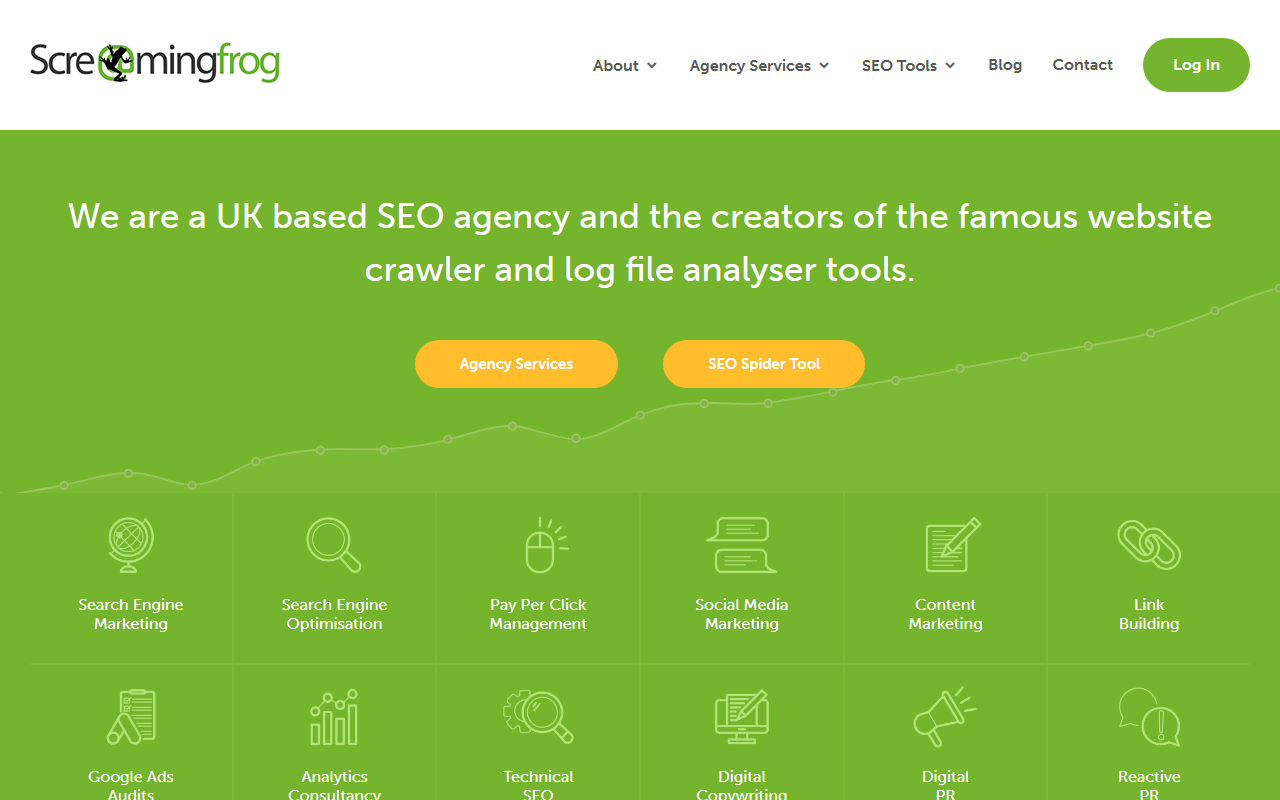
Upon visiting screamingfrog.co.uk, I was struck by the dual nature of the brand. It’s both an SEO agency and the home of the famous SEO Spider software. The website layout is clean, with a prominent download section for the SEO Spider and Log File Analyser. I chose the free download for Windows (v23.3) and was prompted with clear system requirements. The installation was straightforward—no account creation required. The dashboard opens with a simple URL input bar and a toolbar that feels familiar to anyone who has used desktop software. The free tier allows crawling up to 500 URLs, which is generous for a trial. I entered a test site and watched the spider map pages, images, CSS, and JavaScript. The real-time progress bar and filterable results table gave me immediate insight into crawl depth, response codes, and meta data. This is not an AI tool in the traditional sense, but its ability to export structured data is essential for feeding AI models.
Core Functionality and Technical Depth
Screaming Frog SEO Spider is a desktop crawler that analyses websites for technical SEO issues: broken links, redirects, duplicate content, missing meta tags, and page speed factors. The Log File Analyser processes raw server logs to reveal how search engines and other bots actually crawl a site. Both tools are deeply technical. What makes this relevant to an AI-driven office is the recent integration with large language models. The blog post from April 2026 shows how to use the Spider to generate Markdown output at scale, which can then be fed into Retrieval-Augmented Generation (RAG) pipelines. I tested this workflow by crawling a medium-sized site and exporting the crawl data as CSV, then converting it to Markdown using a simple script. The resulting files were clean and ready for embedding. The tool also supports API access for custom integrations, though documentation is sparse for non-SEO audiences. The underlying technology is a custom crawler engine; no specific AI model is mentioned, but the output is AI-ready.
Pricing, Positioning, and Audience
Pricing is not fully listed on the public site, but the free tier (500 URLs) exists. A paid licence unlocks unlimited URL crawling and additional features like JavaScript rendering and automated reports—prices start around £149 per year for individuals. The Log File Analyser has its own licence. Competitors include DeepCrawl (now Lumar), Botify, and Sitebulb, but Screaming Frog differentiates itself with a one-time download model (no SaaS subscription) and deep customisation. It lacks built-in AI features, unlike newer tools that integrate GPT directly. This tool is best suited for technical SEO specialists, digital marketers, and developers who need granular control over crawl data. It is not for casual users or those seeking an AI chatbot; it’s a power tool for data extraction. The agency side of the business serves large brands, but the software is accessible to small teams too.
Strengths and Limitations
The biggest strength of Screaming Frog is its reliability and depth. It is the de facto standard for technical SEO audits, trusted by thousands of agencies worldwide. The free version is functional for small sites, and the paid version offers exceptional value for money. Its recent compatibility with AI workflows—generating clean Markdown or JSON for RAG—makes it a hidden gem for AI engineers who need real web data. A genuine limitation is its steep learning curve: the interface is packed with filters, configurations, and advanced settings that can overwhelm beginners. There is no built-in AI assistance to interpret results. Additionally, the tool is not cloud-based; you must install it on your machine, which limits collaboration. Screaming Frog is not an AI office assistant; it is a specialised data extraction tool that happens to feed AI pipelines. For those who need a crawler that outputs clean, structured data ready for LLMs, it’s indispensable. Visit Screaming Frog at https://screamingfrog.co.uk/ to explore it yourself.












Comments