

First Impressions and Onboarding
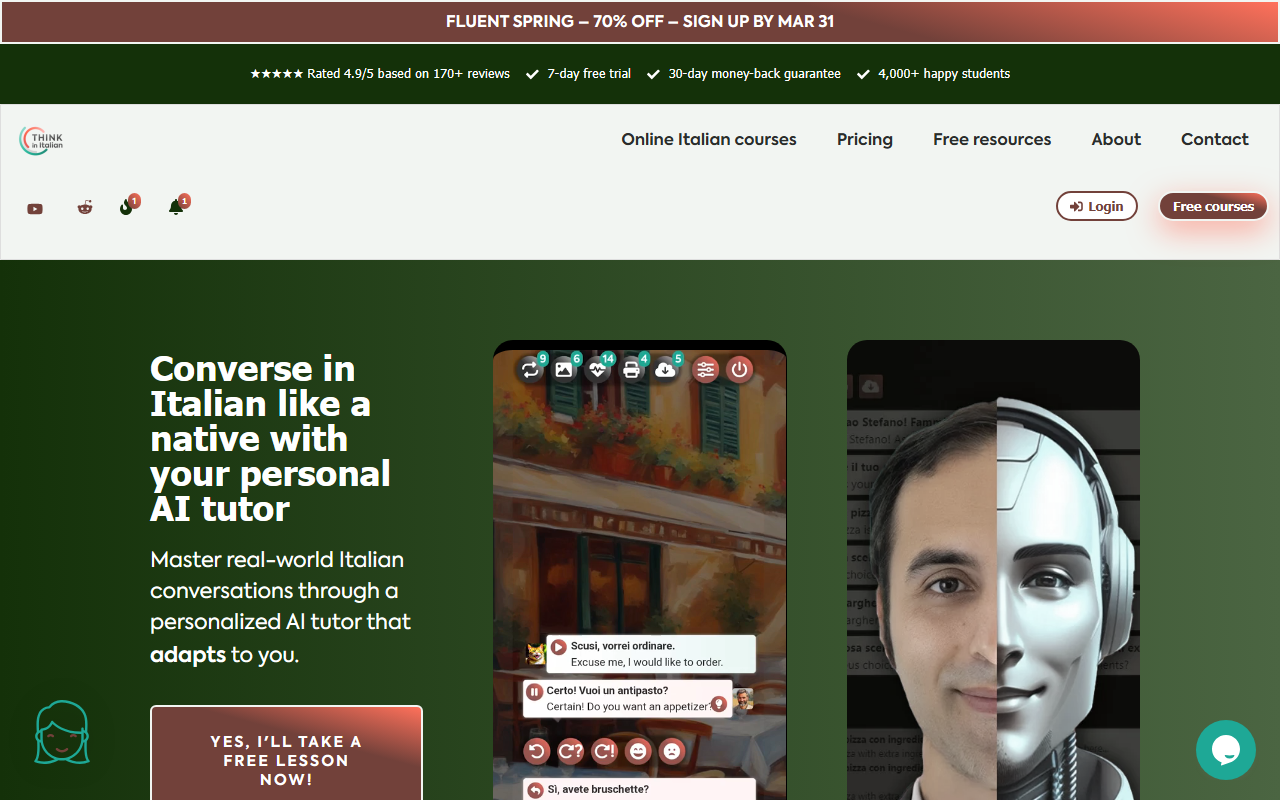
Upon visiting thinkinitalian.com, the interface is clean and immediately inviting. The homepage highlights three core pillars: audio lessons, readings, and an AI tutor. There is no overwhelming sales pitch; instead, a clear call-to-action for a free lesson without requiring a credit card or signup. I clicked through and was taken to a sample audio lesson that uses speech-based explanations—no grammar tables, just natural example sentences. The dashboard, after a quick free account creation (optional for the sample), shows a progress track and a library of lessons sorted by level. The AI tutor is accessible from a dedicated tab, and the first interaction was a simple conversation where the tutor corrected my pronunciation in real time. This onboarding is frictionless and respects the learner’s time.
Core Features and Technology
Think in Italian positions itself as an all-in-one solution. The audio lessons follow a structured 250-lesson plan that teaches grammar through examples, not rules—a method that mimics how children acquire language. Each lesson includes native-speaker audio, and the app uses spaced repetition to reinforce vocabulary. The readings section offers over 1,200 bilingual stories with audio, each designed to be completed in about a minute. This is ideal for busy learners. The standout feature is the AI tutor, which uses cutting-edge speech recognition to adapt to your level and interests. During my test, it gave immediate feedback on my pronunciation of the phrase “Mi chiamo Stefano,” highlighting which vowel sounds needed work. The technology appears to be fine-tuned for Italian phonetics, which is critical for learners. Unlike generic chatbots, this tutor is context-aware, pulling vocabulary from the lessons you have completed. The system also offers AI-powered personalized reviews, where it generates custom quizzes based on your weak points. No external API details are publicly visible, but the integration feels seamless.
Pricing and Market Position
Pricing is not publicly listed on the website beyond the offer of 30 free courses valued at $40. There is no visible subscription page or one-time purchase option without logging in. This suggests a freemium model with a paid upgrade, but the cost is obscured to encourage trial first. Compared to competitors like Babbel or Memrise, Think in Italian focuses exclusively on Italian and emphasizes speaking over reading and translation. Babbel offers multiple languages with structured grammar exercises, while Memrise relies heavily on spaced repetition and video snippets. Think in Italian’s unique value is its combination of audio-first lessons and an AI tutor that actually listens. The tool is backed by positive reviews from Polyglot Club and All Language Resources, which adds credibility. However, because it is a single-language platform, it is not for polyglots seeking a one-stop shop. Serious Italian learners who want to achieve conversational fluency will find it far more targeted than generic apps.
Strengths, Limitations, and Verdict
The biggest strength is the methodology: lessons are speech-based, which trains the ear and mouth simultaneously. The AI tutor is genuinely useful—not a gimmick—and the library of readings provides massive exposure to real Italian. The progress tracking is clear, and the lack of intrusive upsells during the free trial is refreshing. However, there are limitations. The tool is Italy-centric, meaning it focuses on standard Italian and may not cover regional dialects or slang. Also, because the AI tutor adapts to your level, advanced learners might find the early lessons too slow unless they skip ahead. The absence of transparent pricing is a minor frustration; you have to commit to a trial to discover costs. For absolute beginners who prefer gamified, high-reward apps, Think in Italian’s methodical pace may feel dry. But for anyone serious about truly speaking Italian, this is one of the most effective tools I have tested. I recommend it for intermediate learners who have struggled with other apps and want a structured, speech-focused path to fluency. Beginners willing to trust the method will also benefit greatly.
Visit Think in Italian at https://thinkinitalian.com/ to explore it yourself.










Comments