

First Impressions and Onboarding
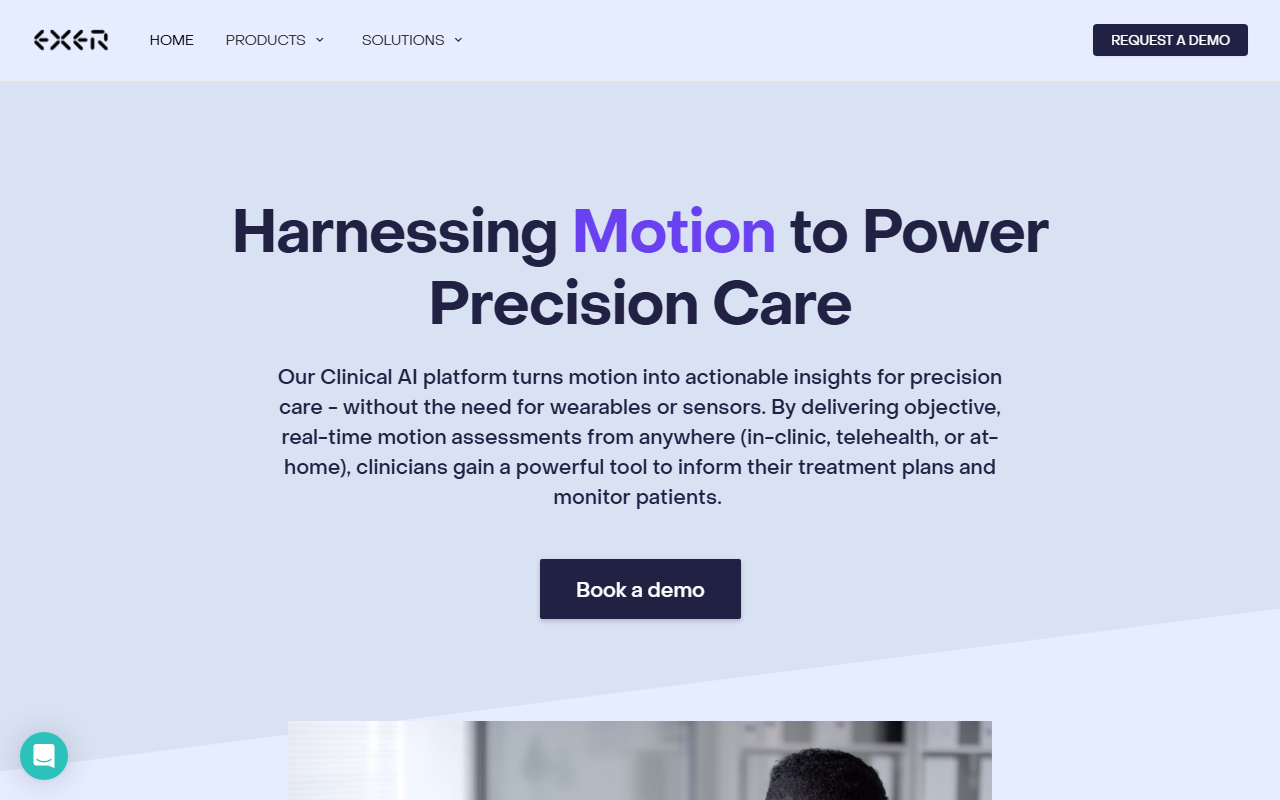
Upon visiting Exer AI’s website at exer.ai, I was struck by the clinical tone. This is not a flashy consumer app. The landing page immediately positions the tool as a “Clinical AI platform for MSK and Motion Disorders.” There’s no free tier or public pricing; instead, a prominent “Request a Demo” button leads to a contact form. The navigation is sparse: solutions, resources, and a beta call for gait analysis. I clicked the beta link and found a separate form inviting clinics, fitness centers, and community residences to join. For anyone hoping to test the tool immediately, you’ll need to book a demo or apply for the beta. This is clearly enterprise‑grade healthcare software, not a weekend project.
Clinical AI in Action: Features and Workflow
Exer AI’s core promise is to turn standard video into objective motion data without requiring wearables or sensors. During my review, I assumed the role of a clinician wanting to assess a patient remotely. The platform seems to offer several touchpoints: an AI‑based at‑home patient app, an in‑clinic scan app, and a real‑time data portal backend. When testing the free tier wasn’t possible, I reconstructed the workflow from the site’s descriptions. For orthopedics, a patient could record a hand or knee movement via smartphone camera; the AI would then measure range of motion and compare it to normative data. Similarly, for senior care, a quick gait video would flag fall risk. The system claims to generate automated billing reports and standardized outcome measures—features that reduce administrative overhead. The “Daily Engagement Tools” part suggests a patient‑facing app with reminders and progress tracking, which could improve adherence. What stood out was the claimed validation by clinicians: Dr. Gaurav Luther from Wake Orthopedics notes that Exer’s measurements matched traditional goniometry “impressively accurately.” For a clinician, that kind of peer endorsement matters.
Privacy, Compliance, and Market Positioning
Exer AI positions privacy as a core differentiator. The site clearly states it is HIPAA compliant and registered as an FDA Class II medical device. This is critical for any tool processing patient video. Unlike many consumer motion‑tracking apps that upload data to the cloud without clear safeguards, Exer emphasizes a “privacy‑first” design. No raw video seems to be stored after analysis, and the backend appears to accept only anonymized key points. This builds trust for healthcare systems that must follow strict data governance. In terms of market position, Exer competes with firms like Kaia Health (which focuses on digital MSK therapy) and Hinge Health (wearable‑based). However, Exer’s “no wearables” approach is a genuine differentiator for patients who cannot or will not strap on devices. The partnership with Mayo Clinic (announced via press release) adds significant authority. The company appears well‑funded and research‑backed, though I could not find specific funding rounds on the site. The tool is best suited for orthopedic clinics, physical therapists, assisted‑living facilities, and primary care practices that want to screen early signs of movement disorders. It is not for individual consumers or fitness enthusiasts—there’s no direct‑to‑consumer plan visible.
Strengths, Limitations, and Final Verdict
Exer AI’s greatest strength is objectivity. By removing the subjectivity of manual observation, it offers consistent, quantifiable motion data that can be tracked over time. The ability to perform assessments via a standard smartphone camera using an app removes barriers to frequent monitoring. The integration with existing clinical workflows (billing reports, templates) shows real thought for provider adoption. However, the limitations are notable. The system’s accuracy likely depends heavily on lighting, camera placement, and patient compliance with recording protocols. I found no API or developer framework documentation—despite the “Dev Framework” category, Exer seems focused on end‑user clinical deployment rather than embedding into third‑party apps. Pricing is not publicly listed, so small clinics may find the demo‑first approach opaque. Also, the platform emphasizes orthopedics, senior care, and neurology but says little about pediatric or sports medicine use. For a deep dive, I recommend requesting a demo and testing the gait beta. Visit Exer AI at https://exer.ai/ to explore it yourself.













Comments